
MaxSil™ × Sustainable Concrete Group
Sovereign Fertiliser Proposal
A proposal to establish a Victorian MaxSil manufacturing facility, improving the efficiency of domestic urea use and strengthening fertiliser supply chain resilience.
Request to the Victorian Government
A 10,000 tonne per year offtake commitment underwritten by the Victorian Government - purchased by Victorian farmers - for MaxSil. In response, Sustainable Concrete Group will fund and build the Victorian manufacturing facility with its own capital. No additional funding is sought.
Please read - critical
The Victorian manufacturing facility will not proceed unless the full 10,000 tonnes per year is underwritten by the Victorian Government. The offtake is a commitment that farmers will purchase the product - the government provides the security guarantee, exactly as the Fertiliser Task Force has guaranteed security of imported urea. There is no net cost or loss to government. Without that underwriting, there is no bankable basis to build in Victoria and the project does not go ahead.
- Approximately 20 local manufacturing and regional jobs
- 10,000 tonnes of glass waste diverted from landfill each year
- 26,000 tonnes of imported urea used more efficiently each year
- Five-year price certainty for farmers
- Domestic production, reducing reliance on maritime supply routes
Policy context and timing
Australia is heavily import-reliant for urea, with around 62% of fertiliser imports arriving through the Strait of Hormuz. The 2026 Middle East conflict disrupted these supply chains, with a significant number of urea vessels delayed in the Arabian Gulf and market prices rising sharply.
The Commonwealth Government responded by establishing a Fertiliser Supply Working Group and underwriting emergency purchases, including a 250,000 tonne Indonesian arrangement and supplies through CSBP and Incitec Pivot. These measures address immediate supply but do not alter the underlying import dependence.
MaxSil offers a complementary domestic response that improves the efficiency of imported urea rather than only financing additional imports.

62%
of Australia's fertiliser imports pass through the Strait of Hormuz
~20
Local jobs
10,000 t
Glass diverted /yr
26,000 t
Urea stretched /yr
0
Maritime imports
Patented IP · Breakthrough Australian technology
Landfill-bound waste glass, converted into plant-available silicon.
MaxSil is produced through a proprietary, patent-protected process that transforms post-consumer soda-lime glass into silicic acid (H₄SiO₄) - the only form of silicon a plant can actually take up through its roots. Nothing else on the Australian market delivers silicon this way, at this scale, from a 100% recycled feedstock.
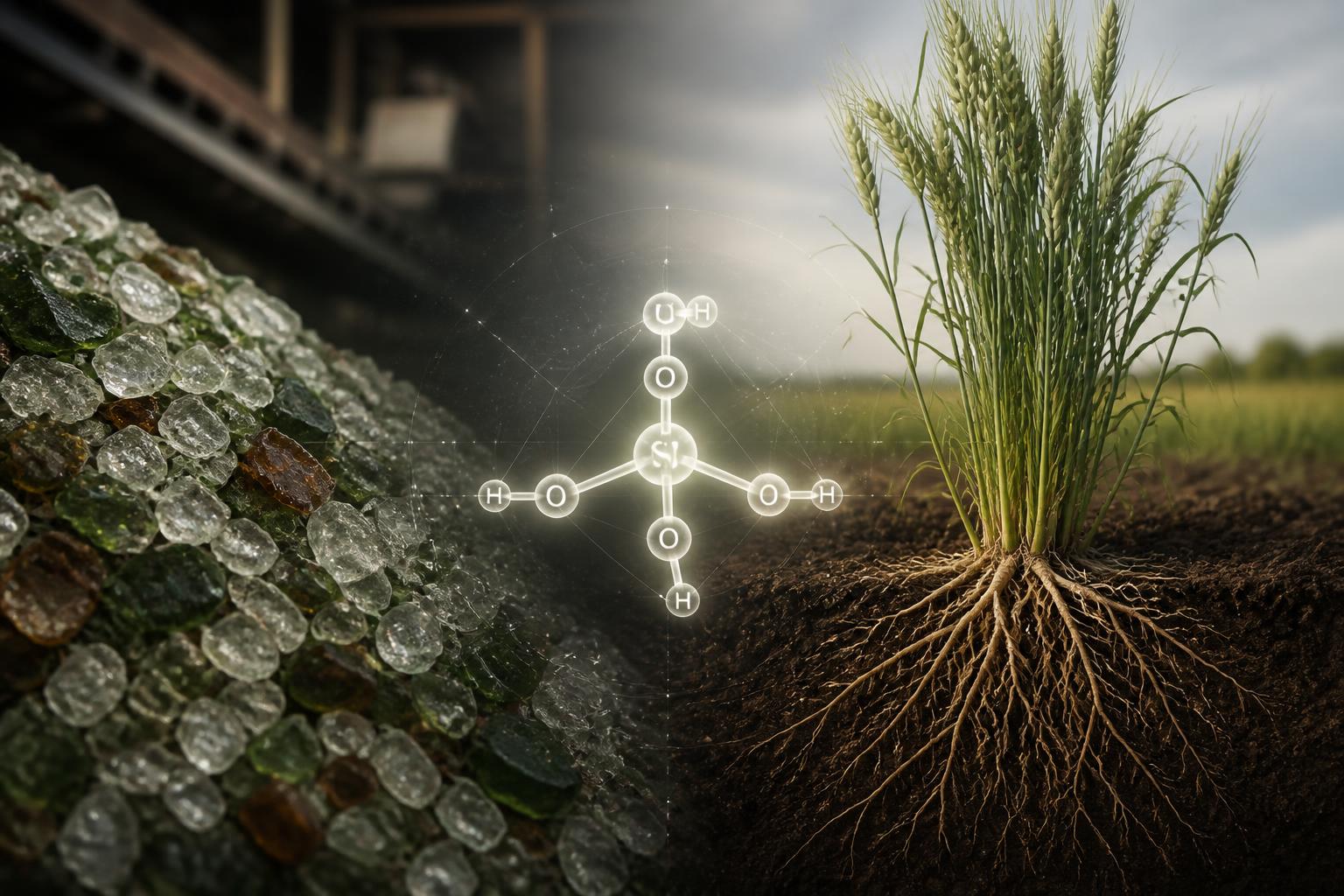
01 · Input
Waste glass
Landfill-bound cullet
02 · Patented process
MaxSil™
Silicic acid H₄SiO₄
03 · Output
High-value fertiliser
Plant-available silicon
Patent-protected
Proprietary conversion process owned by Sustainable Concrete Group. A defensible Australian IP position, not a re-badged import.
100% recycled feedstock
Made entirely from post-consumer soda-lime glass diverted from Australian landfill. A true circular economy input.
Plant-available silicon
Delivered as silicic acid (H₄SiO₄) - the bioavailable form roots absorb. Most silica products are inert and never reach the plant.
Highest value use
Same glass, dramatically higher return: verified 7× urea stretch on a Victorian farm. Fertiliser, not concrete sand.
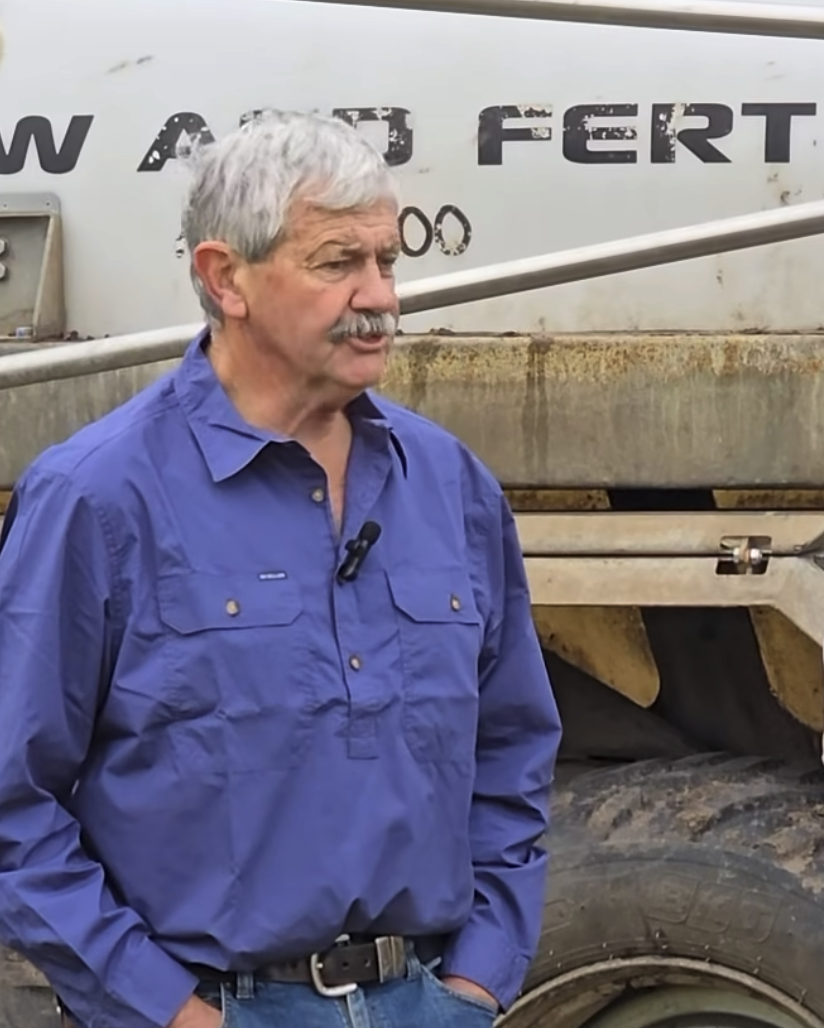
12.4 t
dry matter in 93 days from 40 kg/ha urea equivalent
Verified on-farm evidence
Mid Field Meats, Warrnambool
Tony Donovan manages pasture at Mid Field Meats near Warrnambool, Victoria. The results below were verified by the grower in the same region that this proposal is seeking to support.
"We grew a 12.4 tonne dry matter crop in 93 days from germination, using only 19 units of NPK. Normally you'd be looking at 120 to 200 units to grow an 8 to 9 tonne crop. Those 19 units are roughly equivalent to about 40 kg of urea, whereas a typical program might involve urea at planting and then another 300 kg applied over the crop. There's already plenty in the soil; MaxSil unlocks it."
Even following a drought year, the trial matched previous yields on a fraction of the applied nitrogen. Over five to six months, soil iron fell from 167,000 to 93,000 and trace minerals including calcium, boron and manganese became more available. The product was applied through the farm's existing tow and fert liquid rig, with no additional capital equipment required.
Urea efficiency analysis
Conventional
3.3 ha
per tonne of urea (300 kg/ha)
With MaxSil
24.4 ha
per tonne of urea (40 kg/ha)
Effective stretch
7.3×
per tonne of urea
Note on claims
A 7.3× stretch is mathematically an approximately 86% reduction in urea per hectare (300 kg → 40 kg). We recommend presenting the outcome as "7.3× more coverage per tonne of urea" and the urea saving as "more than 80%" or "around 85%". These figures are supported by the verified Donovan trial and should be attributed to that specific trial.
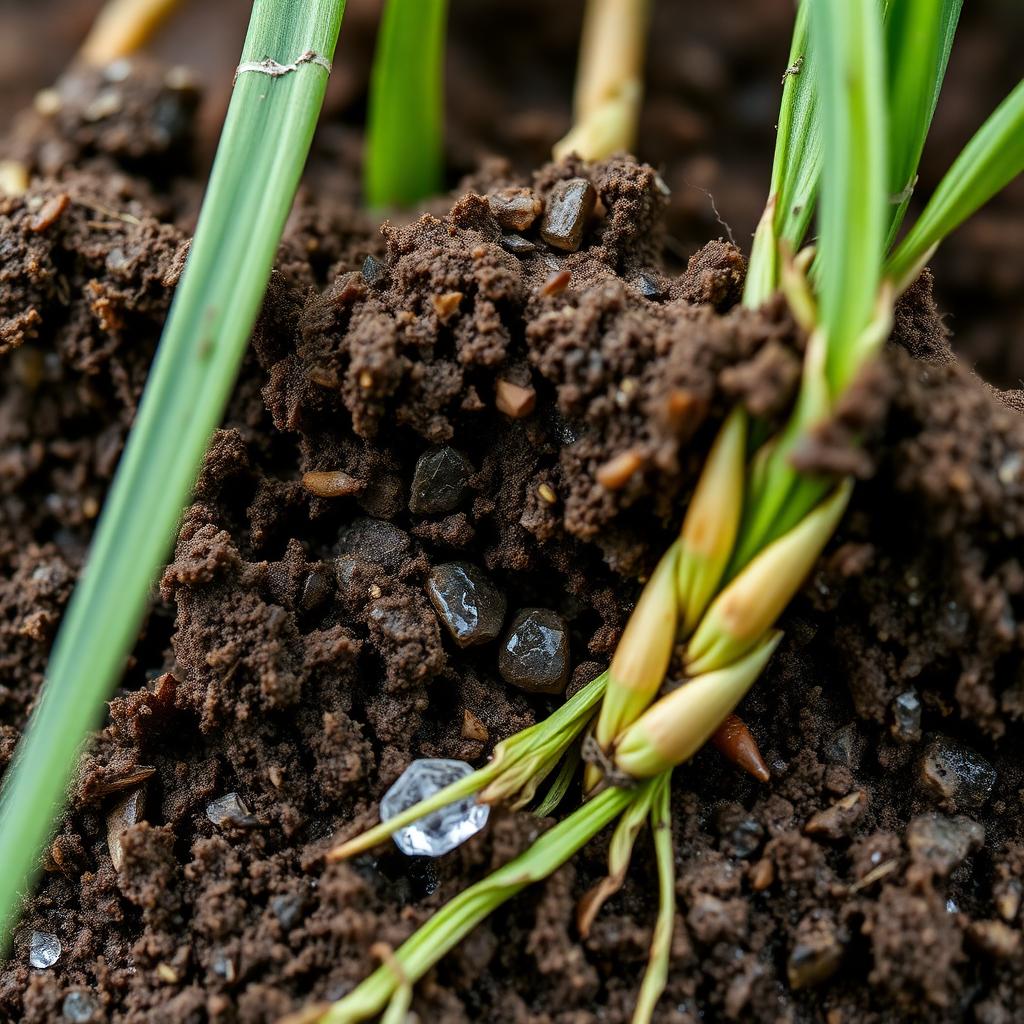
Scientific basis
MaxSil delivers plant-available silicon as silicic acid (H₄SiO₄). Silicon addresses three well-documented limitations of conventional urea programs:
1. Nitrogen use efficiency
Surface-applied urea can lose 10 to 40% of nitrogen to volatilisation and leaching before uptake. Silicon supports root development and improves nitrogen use efficiency, meaning each kilogram of applied urea delivers more plant-available nitrogen (Tripathi et al. 2021; Liang et al. 2015; Ma & Yamaji 2006).
2. Phosphorus availability
Silicon competes with phosphate for soil binding sites, releasing legacy phosphorus that iron and aluminium oxides can lock up. A three-year meadow trial (Xu et al. 2020, Nature Scientific Reports) reported soil-available phosphorus up 15 to 28% with silicon, higher plant-available nitrogen at every nitrogen rate, and a 17% increase in grass biomass at the high nitrogen rate.
3. Plant resilience
Silicon-rich tissue is physically tougher and less palatable to insects, which can reduce pressure from some insecticide and fungicide applications. This is a supporting benefit, not a headline claim, and its effectiveness varies under heavy pest loads.
Important discipline: MaxSil is a complement to urea, not a replacement for nitrogen, phosphorus or potassium. It makes scarce nitrogen go further. That framing is what keeps the Donovan evidence credible and defensible.
Policy rationale
1. Economic efficiency
On the verified Warrnambool figures, the same coverage can be achieved with roughly half the input cost:
| Program | Inputs | Coverage | Cost |
|---|---|---|---|
| Conventional | 7.32 t urea | 24.4 ha | $10,976 |
| Blended with MaxSil | 1 t urea + 2.44 t MaxSil | 24.4 ha | $5,524 |
The same urea coverage is achieved at approximately 7× the area and around 50% of the cost. In periods of supply constraint, the operational benefit is equally important: the program works when urea is unavailable at the wharf.
2. Environmental benefits
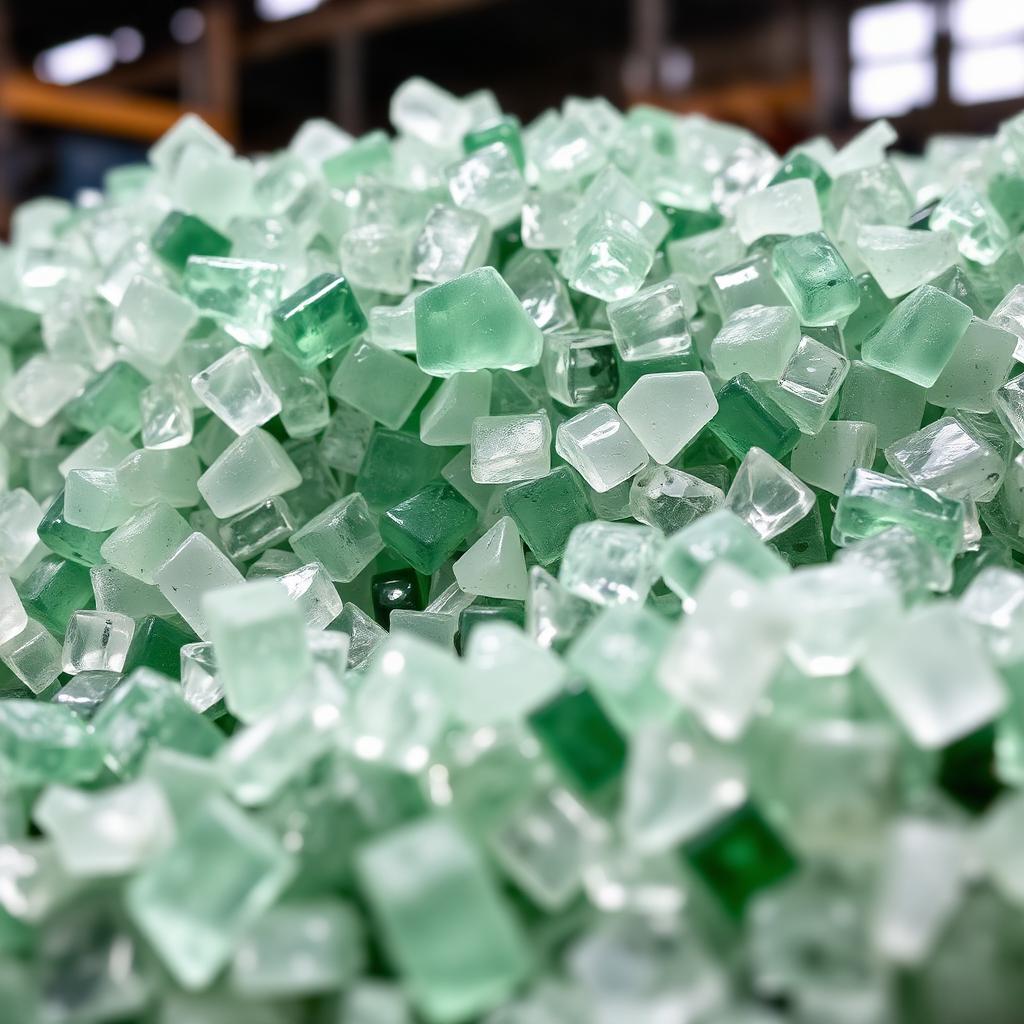
Waste diverted
MaxSil is produced from 100% recycled soda-lime glass. A 10,000 t/yr Victorian plant would divert approximately 10,000 t of glass from landfill each year.
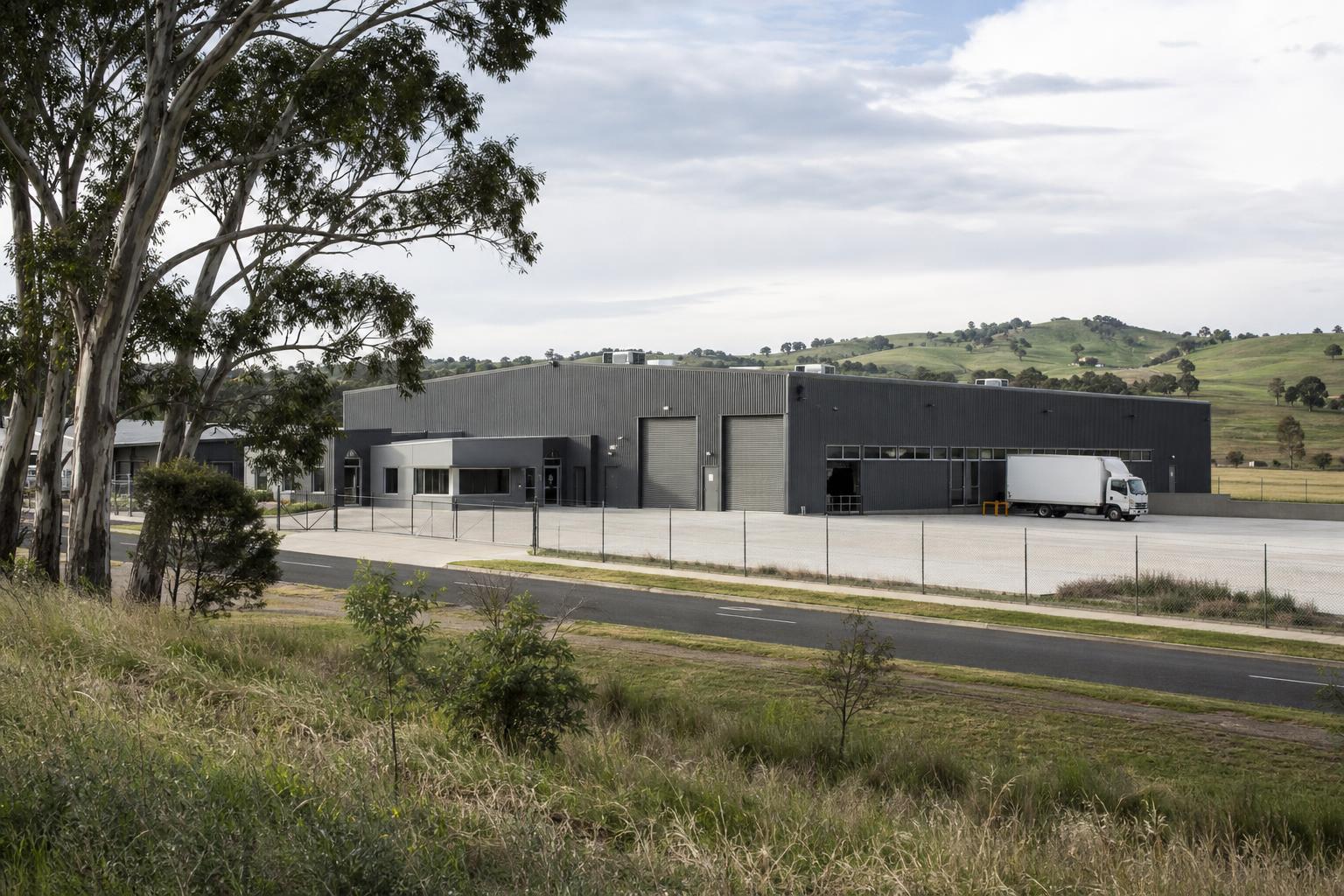
Emissions avoided
Urea is manufactured through the energy-intensive Haber-Bosch process. Displacing approximately 26,000 t of imported urea per 10,000 t of MaxSil avoids corresponding manufacturing energy and shipping emissions.
Less nutrient loss
Higher nitrogen use efficiency means less nitrogen volatilised and leached into Victorian waterways.
3. Supply chain resilience
Every 10,000 t of MaxSil, blended at the Warrnambool ratio, stretches roughly 26,000 t of imported urea per year (1 t MaxSil allows a farmer to achieve the same outcome with approximately 2.6 t less urea). This is 26,000 t of urea a year that does not need to cross an ocean, from a single Victorian plant: permanent, domestic, price stable and expandable to other states as the model is proven.
Sovereign manufacturing context
The 2026 and 2027 supply gap and where MaxSil fits
Australia imports around 2.4 million tonnes of urea a year for agricultural use. Domestic urea production is zero until Perdaman commissions in mid-2027, leaving a 12 to 18 month gap with no domestic buffer. MaxSil is a domestic response available within that gap, and it complements rather than competes with the Commonwealth's flagship investment.
Perdaman (Karratha WA)
March 2027
$6.5B plant, 2.3 Mtpa urea, approximately 1 Mtpa earmarked for domestic use. Backed by NAIF, EFA, and port and water funding. Full production targeted for June 2027.
Strike Energy (Geraldton WA)
Post 2027
Proposed low-emissions green urea using green hydrogen. Hydrogen Headstart Round 2 funding decision expected before Perdaman commissions.
MaxSil (Victoria)
Available now
Already in distribution and deployable through equipment farmers already own. Available for the 2026 and 2027 seasons, including the winter top-dressing window ABARES has flagged.
Why the value extends beyond 2027: Perdaman will address domestic urea supply. MaxSil improves the efficiency of whatever nitrogen and phosphorus is applied, including addressing phosphorus lock-up, which no urea plant resolves. The proposal has a durable policy narrative beyond 2027, not a strategic trap.
Alignment with Victorian government priorities
Victoria has made no standalone fertiliser manufacturing commitments. It explicitly defers to the Commonwealth on national supply chain resilience, with Victoria in a supporting and coordination role. Agriculture Victoria's activity focuses on information and support: fuel and fertiliser supply guidance, and drought and energy cost programs.
At the same time, Victoria's Agriculture Sector Emissions Reduction Pledge for 2026 to 2030 targets emissions from livestock, fertiliser use and manure, backed by an initial $6.1M over two years to fast-track commercialisation of practical on-farm solutions. This is framed as an explicit invitation for industry to partner.
A MaxSil offtake responds to both policy needs: a practical on-farm solution ready for commercialisation today, and the manufacturing commitment Victoria currently lacks.
Proposed exchange of commitments
| Commitment from the taskforce | What SCG / MaxSil delivers in Victoria |
|---|---|
| Underwrite 10,000 t/yr purchase commitment from Victorian farmers | A new Victorian manufacturing facility |
| Certainty a factory can be financed against | Approximately 20 secure regional jobs for Victorians |
| A domestic answer to the import question | Approximately 10,000 t of glass waste diverted from landfill each year |
| Progress against the fertiliser security brief | Approximately 26,000 t/yr of imported urea stretched further |
Government engagement pathway
The Victorian body feeds the national one. There is no standalone "Victorian Fertiliser Taskforce" to address a letter to; the relevant bodies are:
Federal
Fertiliser Supply Working Group
Established April 2026. This is where procurement and underwriting power sits: government agencies, Fertilizer Australia and the National Farmers' Federation. It engages alternative suppliers and underwrites private purchases - a security guarantee, not a government buy. That is the precise mechanism a MaxSil offtake requires.
Victorian
Drought Response Taskforce
Chaired by the Premier, with the VFF at the table and the Agriculture Minister announcing measures; the support package now exceeds $146.5M. The natural home for a "build it in Victoria, jobs and waste" proposal.
Proposed strategy
A state-led contribution to national fertiliser security
Lead in Victoria, with jobs, waste diversion and a factory the Premier can open, and explicitly frame it as Victoria's contribution to the national fertiliser security effort the Working Group is running. Request that the Victorian taskforce carry the proposal up to the federal Working Group, where the 10,000 t/yr farmer-purchase underwrite can be locked in. Both bodies receive an announcement.
Victoria leads
A factory, approximately 20 regional jobs, 10,000 t of glass diverted every year.
Nation benefits
Sovereign silicon feedstock that stretches every imported tonne of urea 10 to 30% further.
Both bodies win
State delivers the build; Commonwealth locks in offtake and underwriting.
Anchoring to existing commitments
Tailoring the proposal to commitments already on the record means this request helps government deliver what it has already said it would do, rather than asking for something new:
- Federal commitments to "jointly engage alternative suppliers" and to underwrite private fertiliser purchases: MaxSil is a domestic alternative supplier, and a Victorian farmer-purchase underwrite is the purchase security the Commonwealth has said it would provide.
- Victoria's $146.5M+ drought and farm input support package: a MaxSil rollout can be positioned as durable input cost relief that outlasts a one-off grant.
- Fertilizer Australia's call to "better manage nitrogen resources" and reduce dependence on uncertain supply: MaxSil directly addresses this objective.
Sequenced national expansion
Once Victoria is committed, a warm introduction to the Federal Fertiliser Supply Working Group
Victoria goes first. Once the Victorian facility is committed, we would appreciate the taskforce's assistance to open a door to the Commonwealth, so we can pursue the same model at our existing Brendale facility in Brisbane: a matching 10,000 t/yr underwrite, a further 10,000 t of glass diverted, additional jobs, and a second sovereign production site for national resilience.
What we are requesting from Victoria
- Carry the Victorian success story into the Federal Fertiliser Supply Working Group.
- Introduce SCG / MaxSil to the Commonwealth officials running alternative supplier engagement.
- Support, in principle, a matching underwrite for our Brendale facility so the model can scale nationally.
Why this reflects well on Victoria
- Victoria is seen to lead the national fertiliser security response, not only receive it.
- A Victorian-built model that then rolls out to Queensland is a Premier-level story.
- Costs Victoria nothing: an introduction, not another dollar of state money.
To be clear: the Victorian underwrite stands on its own and is not contingent on any federal outcome. The federal introduction is a second, sequenced request that lets Victoria take credit for a national outcome.
The proposal
One request, one commitment, one facility
We are requesting a 10,000 tonne per year offtake commitment underwritten by the Victorian Government - purchased by Victorian farmers. In response, we will fund and build the manufacturing facility with our own capital. No additional funding is requested.
The government underwriting is a security guarantee only: the product is bought by farmers, the same way the Fertiliser Task Force has provided a security guarantee for imported urea. There is no net cost or loss to government.
We also ask the Victorian Government to introduce us to the federal Fertiliser Supply Working Group, as we are requesting that a matching 10,000 tonnes per year from our Brisbane plant be secured as fertiliser.
Price locked for five years.
Farmers receive price certainty. Victoria receives a factory, approximately 20 jobs, 10,000 tonnes of glass diverted from landfill each year, and 26,000 tonnes of imported urea used more efficiently per plant.
For the meeting
Download the one-page briefing
A single page for printing, briefing packs, or forwarding to a colleague. Covers the request, the Donovan proof point, the economics, the sovereign manufacturing gap and the offer.
Sources
- MaxSil grower collateral "Urea (N) plus MaxSil" and "Your Liquid Fert Rig" flyers (Tony Donovan / Mid Field Meats figures) maxsil.com.au
- Federal Fertiliser Supply Working Group announcement (Grain Central) graincentral.com
- DAFF Fertiliser Supply Working Group agriculture.gov.au
- Victorian Drought Response Taskforce update (VFF) vff.org.au
- Fertiliser alternatives in demand as urea shortage bites (Farm Online) farmonline.com.au
- Xu et al. (2020), Silicon addition improves plant productivity, Nature Scientific Reports nature.com
Next steps
Speak with a MaxSil™ agronomist about the Victorian facility proposal, the Warrnambool trial data, or how a MaxSil offtake could be integrated into a government program.


Context - our existing operation
Our glass-to-sand recycling centre in Brendale, Brisbane
Sustainable Concrete Group already operates a glass recycling facility in Brendale, Brisbane, processing post-consumer glass into a fine sand product. Today the majority of that output is sold as a concrete sand substitute - a genuine circular economy outcome that diverts glass from landfill, and one we will continue supplying.
In the context of the Brendale plant, concrete sand is a lower value destination for the same material that, when finished as MaxSil and applied to a paddock, stretches Australia's scarce urea by a factor of seven and has produced verified 12.4 t dry matter crops on 40 kg/ha urea equivalent.
Same glass. Same facility. A significantly higher return to farmers and to sovereign fertiliser supply.
This is the second, sequenced ask: once Victoria is committed, we would appreciate a Victorian-led introduction to the federal Fertiliser Supply Working Group so a matching offtake can be secured for the Brendale plant, pivoting more of that Brisbane output from concrete sand to its highest value use as fertiliser - and unlocking the case to divert more glass from landfill.
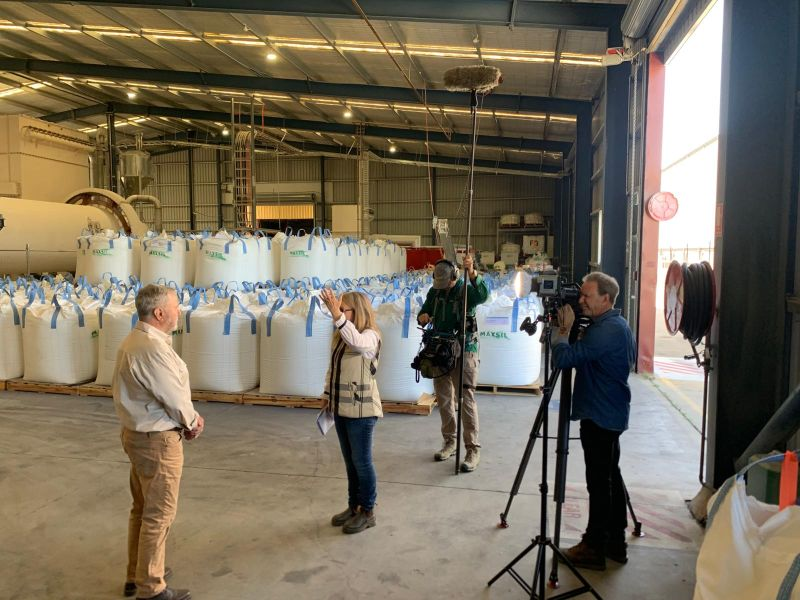
Filming at the Brendale facility with the ABC Landline crew - MaxSil bulka bags on pallets, produced from recycled glass processed on site.
Brendale today
Concrete sand
Lower margin, commodity destination. Glass is diverted from landfill, but the value stops at the concrete pour.
Brendale tomorrow (with federal support)
MaxSil fertiliser
Highest value use: stretches every tonne of urea 7×, verified on a Victorian farm, sold at commercial margins.
The circular economy prize
More glass diverted
A high-value product justifies scaling the plant, diverting more landfill glass, and creating more regional jobs.