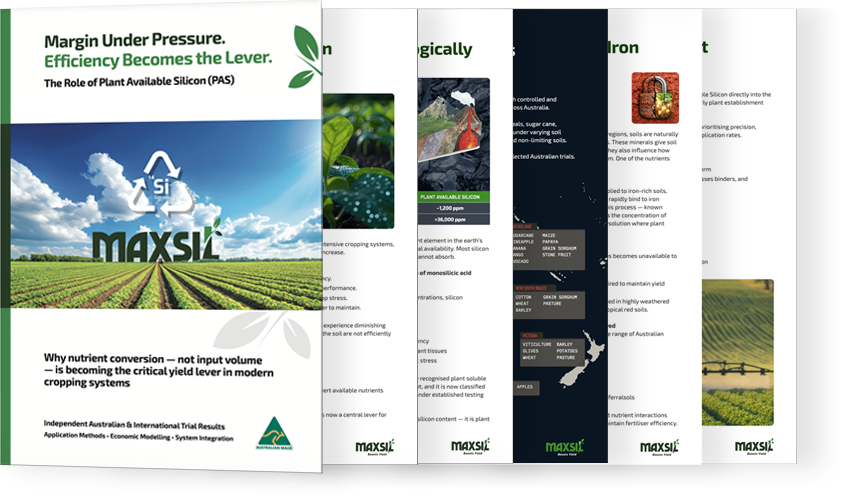
When input costs rise, your margin doesn’t have to fall.
What You’ll Get:
Crop Specific Trial Results
Input Efficiency Data
Application Methods
Discover How to:
Utilise the P already in the soil
Increase Yields by up to 15-20%
Increase Crop Resilience
Fuel costs move. Fertiliser prices fluctuate. Freight becomes unpredictable.
And when they do, your cost per hectare rises — often without a corresponding lift in yield.
Most responses involve increasing inputs.
But increasing inputs doesn’t always increase efficiency.
Even when inputs are necessary, efficiency determines the outcome.
You’re being forced to spend more… for less return per hectare
Tony Donovan Pasture Grower

Pasture & Feed Grower
Warrnambool, VICTORIA
Midfield Meats
“Coming off a drought, we were able to produce the same yield as previous years, but with a fraction of the NPK. 12.4 tonnes in just 93 days from germination, using only 19 units of NPK.”
Tony Donovan, a pasture and feed grower, had been working within a conventional input system — applying nutrients, monitoring results, and managing costs.
But like many growers, he was dealing with diminishing efficiency.
After introducing plant-available silicon, the focus shifted.
Instead of adding more inputs, the system began unlocking nutrients already present in the soil.
The result was a more efficient use of existing inputs — and a reduced reliance on additional fertiliser.
WHAT CHANGED
Nutrients were locked (iron/aluminium)
High fertiliser dependency
What We Did
Applied MaxSilTM via tow & fert
Integrated into existing program
What Happened
12.4 tonne dry mass in 93 days
~19 units NPK vs 120–200 typical
Same or better yield
“We realised the phosphorus was already there — it just wasn’t available.”
When nutrient efficiency improves, input pressure falls — while yield potential remains stable or improves.
Yield improvements in the range of 10–15% in multiple crop types
Reduced reliance on NPK inputs in controlled trials
Consistent performance across varied soil conditions
Independent trials across Australian conditions show consistent trends
Claire Stevens Grain Grower
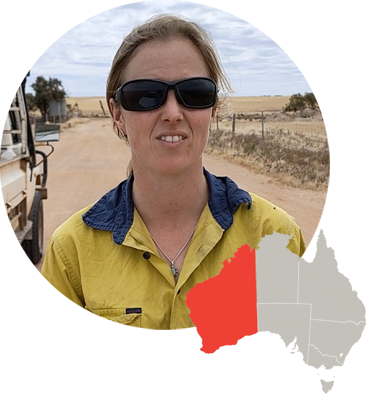
Multi Generational Farmer
Kellerberrin, WESTERN AUSTRALIA
Steven’s Family Farm
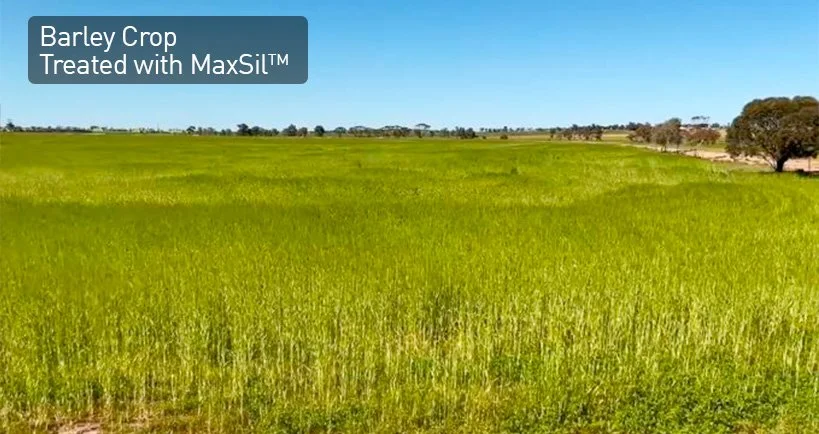
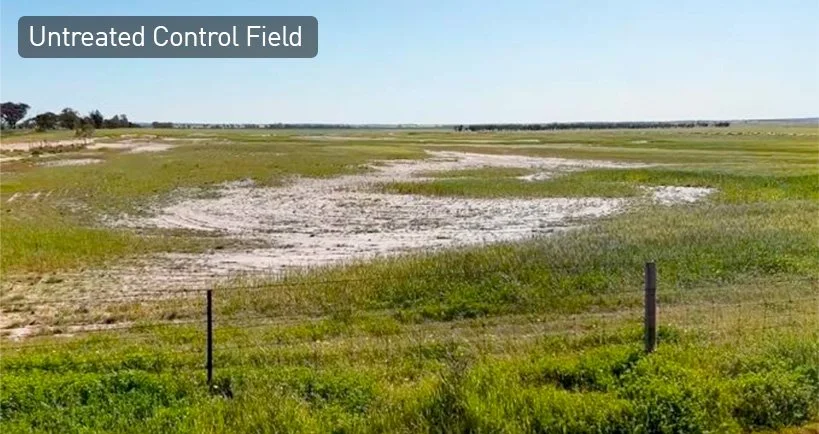
“Once, that paddock didn’t earn a cent in grain production, nor sheep pasture, but now it has ground cover, some feed, and grain yield.”
On a salt-affected paddock with decades of unproductive history, Claire Stevens trialled plant-available silicon as part of a new approach.
The result was the establishment of a viable barley crop on land previously considered non-productive.
A practical example of what can happen when soil constraints are addressed differently.
“This is our first ever crop on this paddock in as long as Dad can remember.”
Plant-available silicon supports the plant’s ability to utilise nutrients more efficiently.
It can help unlock phosphorus bound in the soil, improve structural strength, and support resilience under environmental stress.
This shifts the system from input-heavy to efficiency-driven.
This isn’t about adding more — it’s about making more of what’s already there.
Why this works
Tow-behind liquid fertiliser rigs
Seed coating programs
Slurry or broadcast application
Works with equipment you already use
Limited Release
.
For Growers and Agronomists
.
Limited Release . For Growers and Agronomists .